
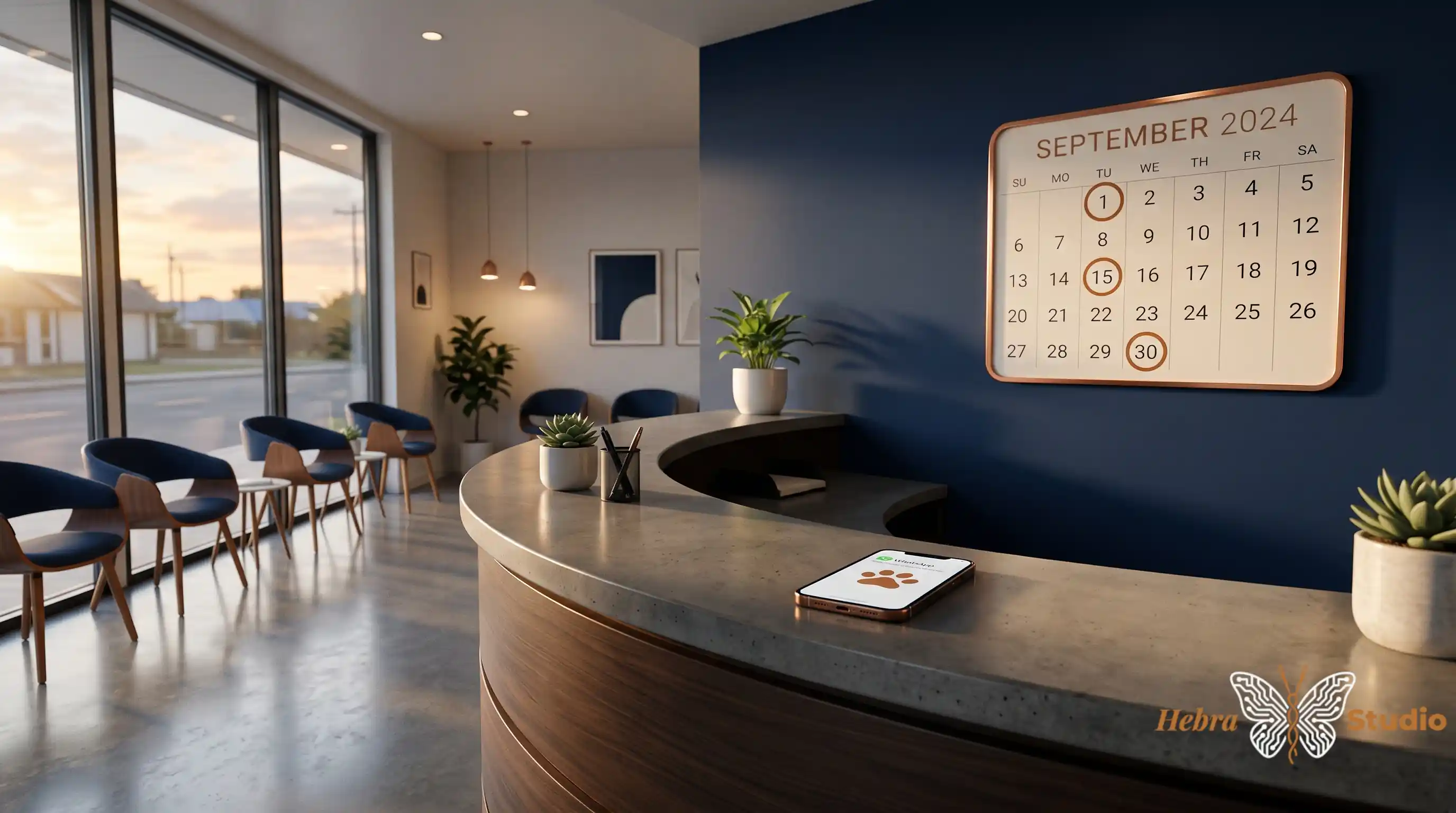
A follow-up visit can remain pending even when both the clinic and the animal's owner want it to happen. Perhaps it was not booked before leaving, the phone number changed or the appointment exists under another name. Before sending messages, I would check what “pending” means in the clinic's software.
The vet determines the date, the reason for the check-up and any changes to the care plan. The automation I propose is limited to organising that information and the calendar. It does not infer clinical needs from species, age or a conversation.
From the follow-up plan to the appointment
In this hypothetical example, the vet records that a check-up should be arranged for a particular date. The workflow finds that follow-up, checks whether it already has a linked appointment and prepares a notice for reception if it does not.
I would need identifiers for the animal and the follow-up, the plan's status, the intended date, the associated appointment and the authorised contact. A phone number alone does not identify the animal: an owner may have several. Nor would I use “last visit three months ago” as a substitute for a clinical instruction.
I would separate two outcomes. If the record is complete and contact is authorised, an appointment reminder can be prepared. If the date is missing, two plans conflict or the situation has changed, an internal task is left for review. The system does not choose which care instruction is correct.
When an appointment is cancelled or rescheduled, the follow-up must be updated before another notice is sent. I would store which reminder has been sent and which follow-up it belongs to, to avoid repeating it every time the workflow runs.
The channel has rules too
Having a phone number on file is not permission to send WhatsApp messages. Its business messaging policy, updated on 23 September 2026, requires the recipient's permission and respect for opt-outs. On WhatsApp Business Platform, starting a conversation requires an approved template; approved templates are also used outside the 24-hour customer service window.
Before choosing that channel, the clinic must check the conditions that apply to the intended use. For an administrative reminder, I would avoid including diagnoses or treatments: the date, clinic and way to manage the appointment may be enough.
Permission for the channel does not settle every obligation concerning personal data either. The GDPR requires data to be limited to the intended purpose and a lawful basis for processing. I would define record access and message retention with whoever manages privacy at the clinic.
If the owner replies with a clinical concern
A reply about symptoms, medication or progress goes to the veterinary team. The automatic message should give the contact channel established by the clinic; for a possible emergency, I would display its approved contact instructions, without assessing severity or independently reassuring the owner.
I would first test the workflow with a list checked by reception: follow-ups with appointments, without appointments, cancelled and with incomplete data. I would measure incorrect notices, duplicates and review work, as well as appointments arranged. Sending a reminder does not show that the follow-up has been completed.
Sources
- WhatsApp: business messaging policy — Consulted on 10-10-2026. Policy updated on 23-09-2026: recipient permission, opt-outs, templates and escalation paths.
- EUR-Lex: General Data Protection Regulation — Consulted on 10-10-2026. Articles 5 and 6: purpose, data minimisation, retention and lawful basis for processing.
To outline this workflow, tell me how you currently record a pending follow-up, without sharing medical records or phone numbers.