
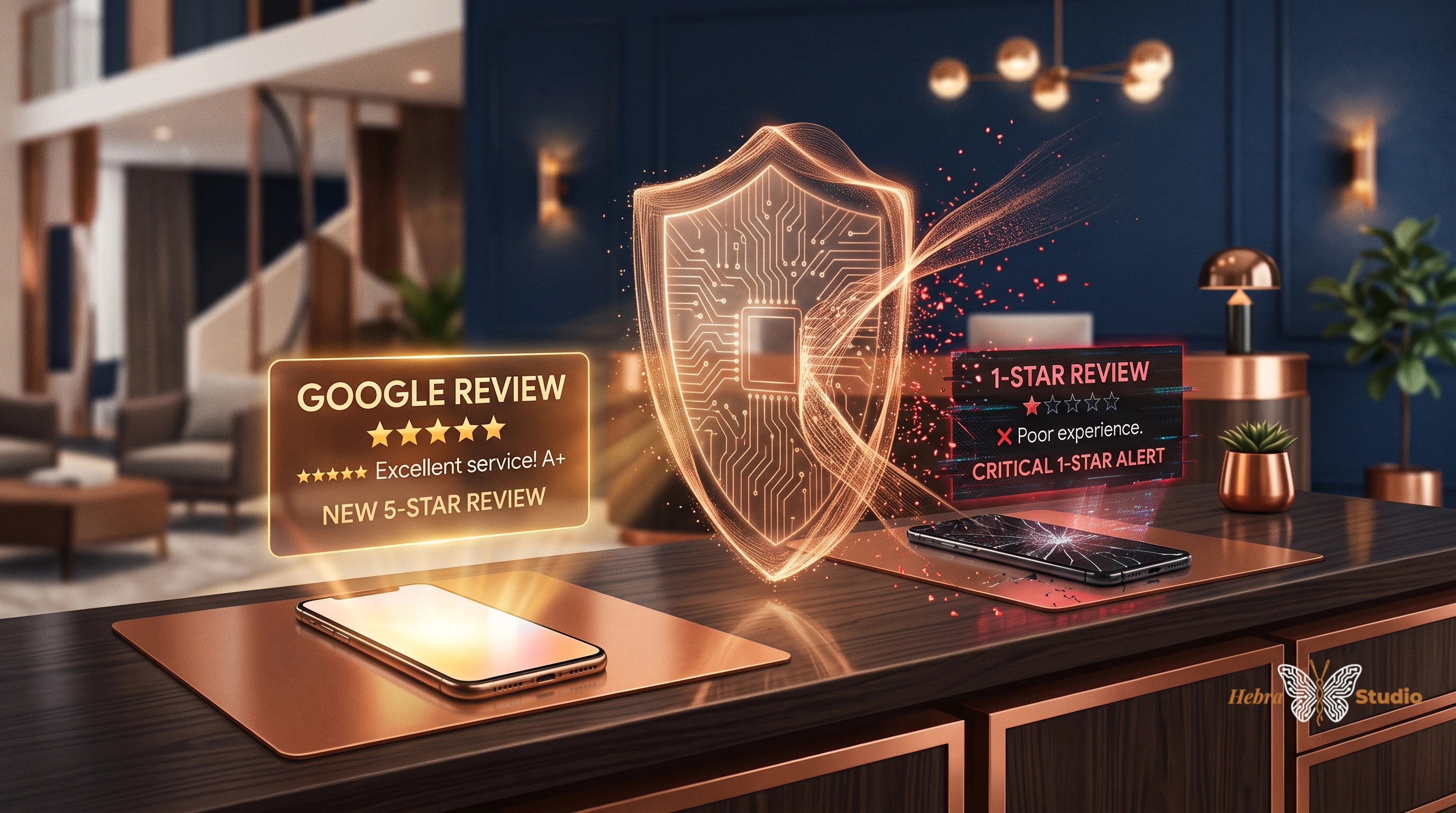
Screening customers with a survey and sending the Google link only to those who are happy changes the request: it stops being an invitation to share an experience and becomes a selection of opinions.
The Google Maps content policy prohibits selectively asking for positive reviews and discouraging negative ones. It also prohibits incentives in exchange for posting a review or changing or removing a negative one. Check that rule before setting up any follow-up.
A request that does not depend on satisfaction
I suggest a simple rule: the same message and link after the service for customers you can appropriately contact through that channel, without deciding who receives it based on their private rating. The invitation is optional. A lack of response does not call for persistent reminders.
A possible message would be:
Hi [Name], thank you for choosing [Business]. If you would like to, share your experience on Google: [Review URL].
This is a message template, not a real conversation. It does not ask for five stars or a positive rating. Nor does it put the customer in the position of writing in front of the person taking their payment. I would avoid that pressure: paying does not need to become a public assessment of the service.
Before automating, define what triggers the message. At a garage, it might be handing back the vehicle; at an advisory firm, completing the agreed work. What matters is that you can explain the rule and that it does not change when there is a complaint. Also check that contact through your chosen channel is appropriate: the review policy does not itself authorise any message sent to a list of phone numbers.
Private support has a different job
You can offer a survey or private contact alongside the public link. It helps you understand and address problems; it must not block or replace the invitation to leave a Google review.
If a response flags a problem, the alert needs to reach someone who can address it. Note who takes responsibility and how follow-up is recorded. The customer keeps the same opportunity to share their experience publicly, even if they are unhappy and the issue remains open.
To check the process, run two tests with fictional data: one satisfied response and one negative response. Both should receive the same public invitation. The second should also trigger the planned internal support. If only the first receives the link, you have set up a filter.
What you can expect
Automation can organise when a request is sent and who receives an issue. It does not guarantee that the customer will review, change an opinion or improve your business's position on Google.
I do not fabricate reviews, offer incentives or ask for a particular rating. This week's useful check is the message, the sending rule and where complaints go. If any of those depends on the customer being happy, it needs correcting.
Sources
- Google Maps · Prohibited and restricted content — Prohibitions on selectively requesting positive reviews, discouraging negative reviews and offering incentives.
If you want to organise review requests and complaint handling around a clear rule, let’s talk.